• ABCMO
  • Board/Bylaws
  • Apply for Certification
    • Application Requirements
    • The Standard Application
    • Special Application on Merit
  • Maintenance of Certification (MOC)
    • MOC Program Requirements
    • Update Your MOC Information
  • Verification of Certification (VOC)
    • Request Primary Source Verification (PSV)
  • News/Archives
  • Contact

American Board of Certification in Medical Optometry

March 21, 2022

Retail and Clinical Pharmacy

Below are several good resources about the Pharmacy profession. While Pharmacy and Optometry clearly differ, the two professions have faced (and continue to face) many similar challenges. Pay particular attention to the difference between “Retail” and “Clinical” career paths, the role of Residencies in education and training, and the development of Clinical Pharmacy Specialists.

Video – Pharmacy Residency – The Johns Hopkins Hospital

Video – Career Opportunities in Pharmacy – Paths After Graduation

PDF – Sample Job Description for a Clinical Pharmacy Specialist – AHSP (See Below)

Website – AHSP Represents Pharmacists Who Serve as Patient Care Providers in Acute and Ambulatory Settings

Website – Board of Pharmacy Specialties

Comments are welcome and can be sent to editor@abcmo.org for publication under the author's name.

March 21, 2022
Filed Under: Reflections

February 21, 2022

It’s Time to Rethink Board Recertification

In his editorial It’s time to rethink board recertification, Dr. Simoyan, an addiction medicine specialist, presents his case against recertification exams for practicing physicians. He argues that while initial certification exams make sense, recertification exams are not the best way to measure continuing competence.

You can read the full article on KevinMD.com

Several years ago ABCMO made a decision like this and transitioned away from requiring the NBEO/ACMO exam every 10 years for recertification and instead implimented a Maintenance of Certification (MOC) program based on accumlating CE credits in Medical Optometry as a better way of ensuring continuing competency.

Comments are welcome and can be sent to editor@abcmo.org for publication under the author's name.

February 21, 2022
Filed Under: Reflections

October 7, 2021

Boston VA Residency Funded – Flashback to 1976

In a private ceremony in Dr. Baldwin’s office recently, Dr. Samuel W. Schlosberg, chief of optometry at the Boston Veterans Administration Outpatient Clinic, accepted an appointment as associate clinical professor at MCO (Massachusetts College of Optometry, now the New England College of Optometry).

Pictured: Dr. Kenneth Myers, President ABCMO (second from Right), Dr. Charles Mullen, Special Advisor to ABCMO (Far Right).

Comments are welcome and can be sent to editor@abcmo.org for publication under the author's name.

October 7, 2021
Filed Under: Reflections

September 2, 2021

How Medical Training Teaches Doctors to be Financially Unhealthy

I recently unearthed all my pay stubs from residency, including the first one — all $89.14 of it.

Sadly, many wonderful, skilled physicians never get to that point (of financial security) but instead remain, like indentured servants, working from a place of financial obligation.

The ugly truth is that medical school taught me financial dependence, not independence.

The quotes above come from Dr. Elizabeth Hughes, Dermatologist.

Read the full article on KevinMD.com

How medical training teaches doctors to be financially unhealthy

Comments are welcome and can be sent to editor@abcmo.org for publication under the author's name.

September 2, 2021
Filed Under: Reflections

August 24, 2021

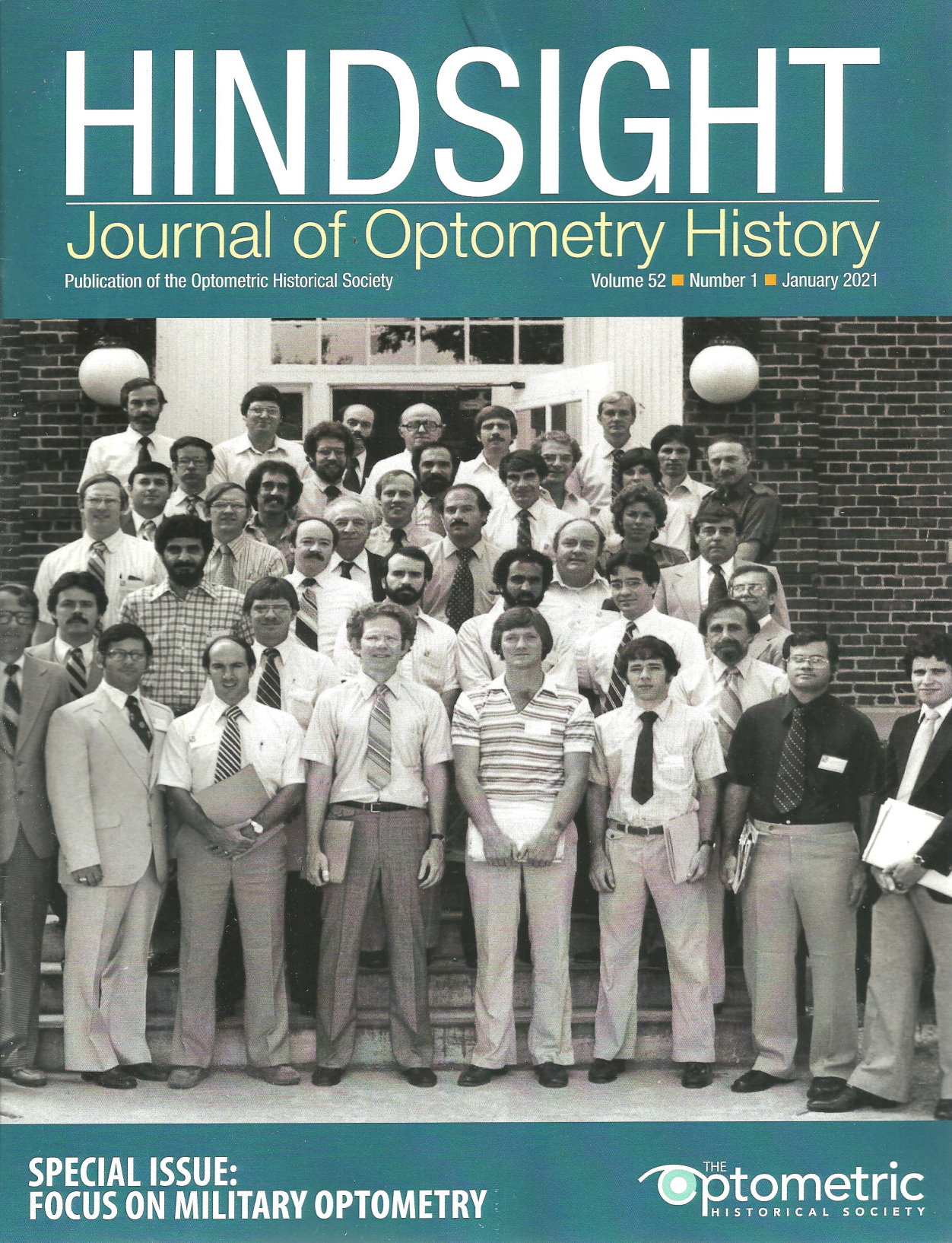
VA Optometry – Flashback to the Summer of 1980

Summer of 1980

First meeting for orientation and training (ca.1980) at the Northport, NY VA Educational Center, of the initial class of VA optometrists recruited as a result of Public Law 94-581 enacted in 1976. That law removed VA optometrists from out-of-date (Civil Service) pay grades (Title 5 of US Code) and directed the VA to offer its optometrists the higher pay grades and promotion opportunities then offered only to VA physicians and dentists under Title 38 USC, and to establish teaching affiliations with schools of optometry.

Although enacted in 1976, the VA had been unable to offer these higher salaries due to stiff opposition from the Civil Service Commission that insisted VA continue to offer only non-competitive Title 5 salaries. A Congressional hearing in early 1978 directed the VA transfer of optometry staff from Title 5 to Title 38 personnel rules, making possible the recruitment of long-needed optometry staff.

The first Director of the new Optometry Service, Ken Myers, is standing in the front row, far left and next to him is Dr. Robert Newcomb the only Chief of a VA teaching Optometry Clinic (Birmingham VA) at that time. A similar action had been taken (ca.1948) when the Department of Defense first appointed optometrists as commissioned officers.

Today, across the nation, the VA is the largest employer of optometrists and largest provider of residency-level and undergraduate-level clinical training in the world, having over 970 optometrists as members of their medical staffs and training about 1,400 student trainees and 220 postgraduate residents per year.

Hindsight: Journal of Optometry History – Vol. 52 No. 1 (January 2021) – Special Issue: Focus on Military Optometry (Subscription Required)

Comments are welcome and can be sent to editor@abcmo.org for publication under the author's name.

August 24, 2021
Filed Under: Reflections

January 23, 2021

Rest in Peace, Primary Care

In this post from KevinMD.com, Dr. Alexis Gopal addresses the corporatization of Primary Care and the negatives effects on Doctor-Patient relationships and health in general.


The corporatization of medicine has destroyed primary care as a specialty. The primary care physician is supposed to be your go-to doctor, your advocate, the coordinator of your health care. Now that corporations buy out hospitals and private practices in an almost predatory fashion, the priority is turning a profit for the corporation at the expense of not only patient health but also the health and well-being of the primary care physician. Who do you think bears the brunt of patient frustration and public misconception? The PCP.

Patients actually accuse salaried primary care physicians of being greedy, “that’s why you don’t spend enough time” during those seven-minute visits. The reality is that in corporatized medicine, the physicians don’t make the rules. More often than not, hospital administrators with no clinical background or experience dictate how these practices are run. They decide how many patients you need to see in a day to turn a profit, to maintain the salaries of superfluous middle managers.

Primary care has become an unsustainable specialty. The average internal medicine patient, especially the older demographic, has numerous chronic medical issues. How does a primary care physician address their concerns in such a short visit, much less develop a relationship, which is just as important to patient health?

At the beginning of my career, I took great joy in learning about each patient, their family and home dynamic, having two minutes to chat about “how’s the family?” Now, it’s a challenge to make eye contact, as the pressure to document on the electronic medical record to maximize reimbursement and prevent litigation is the priority.

The nail in the coffin? There are several. In one of the wealthiest nations in the world, why are our patients so chronically ill? Rates of obesity, autoimmune disorders, cancer, cardiovascular disease are increasing. Assembly line medicine has led to “band-aid” medicine, relying heavily on pharmaceuticals to put out fires, because who has the time to focus on prevention and lifestyle counseling? Oh, and those greedy, millionaire PCPs, as the public perceives them? Their salaries actually go down every year, and they have to make up the difference by seeing more patients, in these poorly constructed RVU systems. Physician burnout is at a record high, understandably so. Primary care physicians are leaving medicine in droves. An already existing shortage will reach devastating levels in the very near future. Corporations like Walmart are opening clinics staffed mostly by nurse practitioners.

Who will care for the complicated patients, who may have rare illnesses in addition to the common fare like diabetes?

I fear for the future of health care in this country. Until the day physicians become as well organized and as strong a lobby as nurses, pharmaceutical companies, and health insurance companies, primary care is doomed as a specialty. Rest in peace, primary care.


By becoming employees of corporate medical systems over the past 40 years (beginning with HMOs) clinicians unfortunately lost the autonomy they had when owning their practices.

Optometrists face the same situation now even if they own their practices due to vision care plans and insurance companies setting fees that produce a price “race to the bottom.”

Today’s private optometric practices carry heavy incentives to see far more patients than ever before.

America remains the only advanced Nation in the world that allows direct-to-consumer media advertising of medications and procedures and the World Health Organization ranks American health care below many other countries. And ours is the most expensive.

In addition, while the percentage of our Gross Domestic Product spent for health care rose from about 7% to over 16% patient (and clinician) satisfaction declined.

All of which is why one sees references to the “health care industry” rather than the “health care profession” and to “health care providers” rather than “doctors.”

Kenneth J. Myers, Ph.D., O.D.

Comments are welcome and can be sent to editor@abcmo.org for publication under the author's name.

January 23, 2021
Filed Under: Reflections

December 10, 2020

Eight Steps to Ensure the Professional Standing of Optometry

Introduction

In Eight Steps to Ensure the Professional Standing of Optometry Dr. Charles Mullen looks at how the threats to traditional optometric refractive practice are weakening the stature of the profession and then presents a clear plan for reversing these effects and strengthening the profession instead. Residency Training, Specialization and Board Certification all play an important role.

Eight Steps to Ensure the Professional Standing of Optometry

Comments are welcome and can be sent to editor@abcmo.org for publication under the author's name.

December 10, 2020
Filed Under: Reflections

October 9, 2020

Dying in a Leadership Vacuum

From the New England Journal of Medicine

Covid-19 has created a crisis throughout the world. This crisis has produced a test of leadership. With no good options to combat a novel pathogen, countries were forced to make hard choices about how to respond. Here in the United States, our leaders have failed that test. They have taken a crisis and turned it into a tragedy.

To continue reading the full editorial please visit:

New England Journal of Medicine – Dying in a Leadership Vacuum

Comments are welcome and can be sent to editor@abcmo.org for publication under the author's name.

October 9, 2020
Filed Under: Reflections
  • « Previous Page
  • 1
  • 2
  • 3
  • 4
  • …
  • 6
  • Next Page »

Email Updates

ABCMO News

  • ACMO Exam Scheduled for Friday, June 5, 2026
  • The Journal of Medical Optometry – First Edition
  • A Reminder to VA Residents
  • Background Information – Article 19 – Maintenance of Certification (MOC)
  • Dr. Charles F. Mullen Joins ABCMO as Special Advisor to the Board

Reflections – Editorials and Articles of Interest

  • Specialization and Subspecialization
  • Ophthalmology Workforce Expected to Decline
  • 10 Administrators for Every Doctor
  • What is Medical Optometry?
  • A Letter to VA Optometry Residency Coordinators: Benefits of ACMO

Comments are welcome and can be sent to editor@abcmo.org for publication under the author's name.

Certification Requirements

The following are in addition to an O.D. degree from an accredited North American school or college of optometry and a current state license to practice.

Residency: Completion of a full-time, ACOE (or equivalent) accredited, postgraduate clinical residency training program having major emphasis on medical optometry.

ACMO Exam: Passage of the Advanced Competence in Medical Optometry exam (or equivalent) offered by the National Board of Examiners in Optometry.

Practice: Documented significant practice of medical optometry for a minimum of two years immediately prior to application for certification.

The Practice requirement is waived in the two years immediately following residency training.

Complete Application and Requirements

Recognized by the American Board of Optometry Specialties

American Board of Optometry Specialties Logo

© 2010-2026 · The American Board of Certification in Medical Optometry · 18683 Milton Ave, Big Rapids, MI 49307
Privacy Policy · Terms of Use · Log in